| Community Overview |
|
| Caja Establishment Date | January 2012 |
| Population | 500 |
| Major Professions | Agriculture (Coffee, Beans and Corn) |
| No. of Active Caja Leaders |
27 |
| Stage | Micro-enterprise and family Micro-businesses |
| Total Project Funds | TBD |
| Social Enterprises funded by the Caja |
Community Bakery |
| Caja Statistics (as of Apr. 2014) |
|
| No. of Savings Accounts |
184 |
| Total Savings |
HNL |
| Total Amount Loaned | |
| Number of Loans Granted |
|
| Repayment Rate |
|
| Shares Initiation Date |
|
| No. of shares sold |
|
| Price Per Share |
|
| Total Share Capital | |
| Additonal Information |
| General Community Profile |
| Microfinance Methodology |
| Pre-Brigade Lesson Plans |
| Business Profiles |
| General Overview |
|
| Beneficiaries |
TBD |
| Volunteers |
199 |
| Hours of Education | ~140 |
Business Profiles coming soon!
About El Cantón
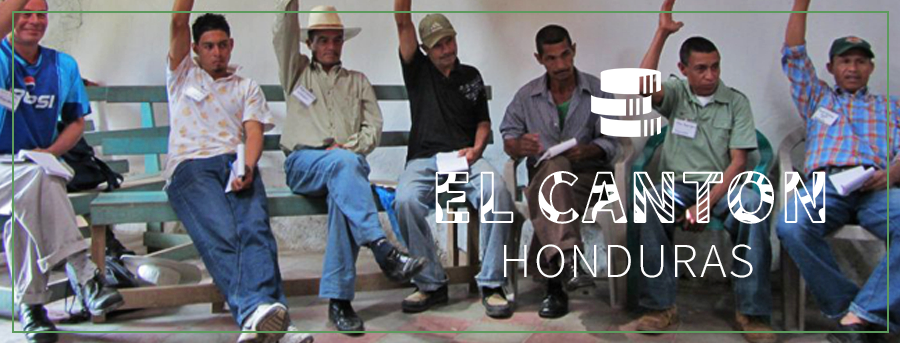
El Cantón is a community with a population of approximately 500 people
living in 91 homes. It is located in a valley belonging to the municipality
of Teupasenti, in the department of El Paraíso. El Cantón is an
agricultural community relying on the production of coffee, corn and
beans for sustenance. The average family only earns about 1,750
Lempiras ($90.00) per month, which averages to less than $1.00 per
person per day. Despite their arduous work schedules on the fields,
community members have been extremely invested in Global Brigades'
projects. Thanks for the joint effort of community members and Global
Brigades' volunteers and staff, all homes have access to clean water,
public health projects, access to credit via the community bank, and
will soon be able to seek medical attention in the new Health Center
being completed by the architecture program.
El Cantón's Economic Challenge
The majority of the community members rely on agricultural work to support themselves and their families. They mainly grow corn and beans to sustain their families. Some community members also grow coffee to garner a meager income. This activity is highly seasonal, providing the families with a very fluctuating income throughout the year. For this reason, it is tantamount for them to smooth their income over the months, to avoid falling short of resources outside harvesting periods.
Many community members work by the day for the standard pay of HNL 100 (around USD 5) as masons or peasants on others' land, but this is far from representing a stable and predictable source of income. On top of this, the agricultural activity tipically requires investments to be made beforehand, that is to say, way earlier than the crops are harvested and sold producing a revenue. It is evident that the necessary purchases of fertilizers and seed become very difficult when savings are not available. To overcome this hurdle, community members often resort to the support of 'coyotes', middlemen who exploit the lack of access to market that the people in El Canton suffer to buy their harvests directly in the community and re-sell them at much higher prices in the markets of bigger, farther away cities. Besides making big profits to the expenses of the isolated peasants, coyotes are also aware of the lack of funds to invest in fertilizers and seeds that farmers suffer from, and often lend them money in advance, discounting the amount later on when they buy the harvested crops - of course at very high interest rates.Obviously most of the problems that campesinos encounter performing their agricultural activities derive from the complete lack of access to savings and credit in the community.
Before Global Brigades helped the community establish the Caja Rural, the community had absolutely no access to any financial institution or its services. The closest savings&loans cooperative was located in Teupasenti, the little town at the bottom of the valley, from 2 to 2 and a half hours away on foot. Only one member of the community owns a car, and very few own a motorbike, which makes the distance between El Canton and Teupasenti very complicated to overcome. For these reasons, people in El Canton were living as subsistence agriculturalists and living on a day-to-day basis.
Microfinance in El Cantón
El Cantón was the fifth community the Microfinance Program in Honduras expanded to in November 2011. The Microfinance Brigades in-country team and brigaders from fourteen different universities have worked in this community since then. During this time, staff and volunteers have worked with community members to:
• Train and establish a Community Rural Bank (Caja Rural)
• Provide educational seminars to adults and children in the community on the importance of savings.
• Promote voluntary savings in the community to reach a level of sustainable capital for the Caja.
• Door-to-door community visits to further encourage community members to trust the system of
the community bank and open accounts to actively save.
• Provide community-wide workshops to sensitize community members about the importance of
creditworthiness and reliability in repaying loans
• Door-to-door community visits to teach the basics of household budgeting and accounting to
families and women
• Perform a market study and a feasibility analysis for the creation of a caja-owned community
micro-entreprise, a bakery
• Advise the leaders of the micro-entreprise, selected among caja members, on business
management and development techniques
• Start a program of family consulting to help them set up household-owned micro-businesses
Microfinance/Business Brigades Chapters that Worked in El Cantón
|
|||
| Brigades Chapter | Month | Program | Volunteers |
|
Mount Allison University, Canada |
February 2012 |
Microfinance | 12 |
| Yale University, USA | March 2012 | Microfinance | 10 |
|
University of Southern California, USA |
March 2012 |
Microfinance | 17 |
|
Wake Forest Univ + Univ of California Berkeley + Duke Univ, USA |
December 2012 | Microfinance | 18 |
|
University of Southern California, USA |
January 2013 | Microfinance |
19 |
|
Mount Allison University, Canada |
February 2013 | Microfinance |
12 |
|
Indiana University, USA |
March 2013 | Microfinance |
16 |
|
University of Southern California, USA |
March 2013 | Microfinance |
20 |
|
Saint Louis University, USA |
January 2014 | Microfinance |
27 |
|
College of Charlestone, USA |
March 2014 | Microfinance |
29 |
|
University of California Los Angeles, USA |
March 2014 | Business |
19 |
Current Status
Last Visit: April 20, 2014
Our work in El Cantón is not done yet. The Business program has just entered and started an ambitious plan to further empower community members through family-based consulting, aimed at developing more and more family-run microbusinesses. In the meantime, the local bakery is flourishing and the members of the Caja have nearly doubled over the first two years of activity. The next big goal is for the Caja members to complete the construction of the caja's proprietary building, where caja- and community-wide meetings will be held and a community library will be arranged.
Visit Other Programs in El Cantón
Global Brigades strives to implement a model of Holistic Development in communities through a system of collectively implementing health, economic, and education initiatives to strategically meet a community's development goals. Learn more about the other programs being implemented in El Cantón:
 Medical
  Dental
 Engineering
 Water
Water Public Health
 Business
 Architecture
 CHW
CHW