Santa Rosa Guinope, Honduras


 Click on Programs to learn more about their work in this community
General Information
| Population* | 500 |
| Number of homes | 120 |
| Avg # of people per home | 5 |
| Number and % of children | 119: 24% of the population |
| Primary Occupations | Agriculture |
| Water System | Yes |
| Community Bank | No |
| Electricity | Yes |
| Corresponding Health Center & Distance | CESAR - Santa Rosa de Guinope |
| Common Illnesses | |
| School Access and Distance |
Primary School - In community High School - In community |
| GPS |
N 13° 49’ W 86° 57’ |
| Municipality | Guinope |
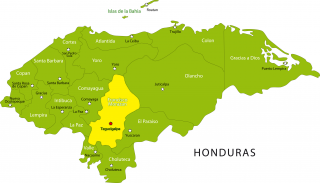
| Department | El Paraíso |
| Distance from compounds | 2 1/2 Hours |
* Population does not reflect how many patients will be seen on medical
brigades as many people from surrounding communities come seeking
Medical Brigades medical attention.
Top Three Needs Expressed
The top needs expressed by the key community members are foot bridges, irrigation systems, and medicine.
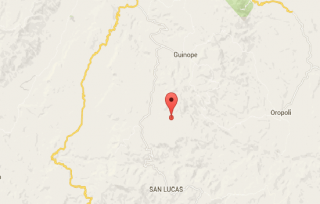
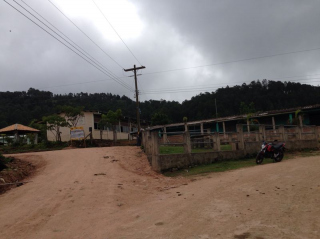
Santa Rosa de Guinope is a small community located deep in the mountains. It is only accessible by a small, twisting road. Given its altitude, it is cool during the day and cold at night.
Santa Rosa’s educational system includes Kinder, Primary, and Middle schools (until 9th grade), and the director’s name is Gladis Escoto. There are approximately 135 students. It is estimated that about 90% of the community knows how to read and write.
Santa Rosa has a water system built by the government in 1982. The main problem with Santa Rosa’s water system is that water arrives about every other day and that the Water Council is not currently functioning. Local nurses claim that the Water Council has not taken responsibility for the maintenance of the system as the water is being chlorinated only once a month1, nor have they been regularly cleaning the tank or collecting the monthly water fee. They estimate about 90% of the community is connected to the water system. The Water Council has 5 members and Daniel Castro is the president.
Santa Rosa has a Health Center in the community which is staffed by 2 nurses. The Health Center offers general medicine, but does not offer dentistry nor is there a community health committee.
The most common illnesses seen by community members are respiratory infections, hypertension, and malnutrition. Approximately 90% of the community has latrines that currently function. 0% has eco-stoves (estufas justas) and about 90% is estimated to have concrete floors.
The average family income per month is estimated to be 1600 Lempiras, which is approximately L320 (US $16.94) per person3. The majority of homes are made of adobe. The main form of employment in Santa Rosa is agriculture on rented land, and the main products that are cultivated are coffee, corn, beans, and other small horticultures. Santa Rosa has no access to credit, though are interested in forming a community bank.
Santa Rosa has previously received dental brigades outside of Global Brigades, specifically from the Baptist Church of Honduras who were last there in January 2010. They enjoy working with the Baptist Church because they are in the community for a longer period of time and they also provide food to the community during their brigade.


Source of information: Key informant interview
Date of interview: 14 April 2010
1The accepted regulation frequency for chlorinating water is every 4 days.
2CESAMO and CESAR are terms used for types of health centers. CESAMOs are larger, more comprehensive facilities that usually have a physician on staff at all times and occasionally a dentist. CESARs are more remote, less equipped facilities, usually with 1-2 nurses on staff.
3According to Red Solidaria and World Food Programme in Honduras, the average family is approximated at 5 people per household, the poverty line is L930 (US$49.23) per person per month, and the extreme poverty line is L617 (US$32.66) per person per month.