San Juan, Guaimaca, Honduras


 Click on Programs to learn more about their work in this community
General Information
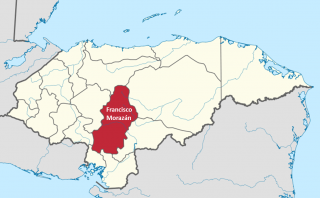
| Population* | 900 |
| Number of homes | 140 |
| Avg # of people per home | 6.4 |
| Electricity | Yes |
| GPS |
N 14° 33.261’ W 086° 50.104’ |
| Municipality | Guaimaca |
| Department | Francisco Morazán |
| Corresponding Health Center | CESAMO-Guaimaca |
| Distance from compounds | 2 hours |
| Road conditions | Excellent |
* Population does not reflect how many patients will be seen on medical
brigades as many people from surrounding communities come seeking
Medical Brigades medical attention.
Expressed Needs and Capacities
The top three needs expressed by the key community members are improvement in the educational system including tackling the issues of absenteeism and illiteracy, prevention of diarrhea and dengue, and more work opportunities. Other community members expressed water and waste systems as another central concern.
San Juan’s educational system includes Kinder, Primary, and Middle schools (until 9th grade). There are 437 students, and it is approximated that about only 30% of the community knows how to read and write.
San Juan has a water system built by ALAS 8620 in 1992. The main problem with the water system is that the Water Council doesn’t always work as a team and lacks organization. Water arrives every day and is regularly chlorinated every 4 days.1 They estimate about 95% of the community is connected to the water system. The Water Council is directed by 5 members, and Santa Gajeros is the president.
San Juan does not have a Health Center in the neighborhood, but is served by the city health center (CESAMO) of Guaimaca (San Juan is a neighborhood within the city of Guaimaca) about 15 minutes walking distance from the community. Dental care is available at the health center in Guaimaca. There are health volunteers from the CESAMO-Guaimaca that visit San Juan.
The most common illnesses seen by community members are mosquito-bred illnesses like dengue, diarrhea, and the flu. Approximately 90% of the community is estimated to have latrines that currently function. 0-10% have eco-stoves (estufas justas). Almost 90% is estimated to have cement floors.
Though there is no health data available at the community level for San Juan, below are some health center statistics from the CESAMO-Guaimaca2 that serves San Juan:
I. Annual Morbitities, 2009: CESAMO-Guaimaca
|
Rank |
Morbidity |
Number of Cases (2009) |
|
1 |
Common Cold |
2,711 / 28.7% |
|
2 |
Hypertension |
1,468 / 15.6% |
|
3 |
Diarrhea/Dysentery |
790 / 8.4% |
|
4 |
Intestinal Parasites |
783 / 8.3% |
|
5 |
Urinary Infections |
639 / 6.8% |
|
6 |
Asthma |
412 / 4.3% |
|
7 |
Acid Peptic Disorders |
349 / 3.7% |
|
8 |
Skin allergies |
306 / 3.2% |
|
9 |
Pharyngotonsillitis |
226 / 2.4% |
|
10 |
Anemia |
210 / 2.2% |
Centro de Salud Statistics, Centro de Salud-Francisco Morazán, 16 Marzo 2010
The average family income per month is estimated to be 2375 Lempiras, which is approximately L475 (US $25.15) per person3. The majority of homes are made of adobe. About half of households in the community work in agriculture on owned land and the other half works in a wood factory nearby. The main products that are cultivated are coffee, corn and beans. San Juan can access credit through a community bank that is shared between San Juan, Herradura, and La Mansion (nearby communities). There is also another communal bank in the community.
San Juan has had several other organizations carrying out projects in the community. The Baptist Church brings brigades to San Juan as well, though the community relates better and accepts Global Brigades because we are consistently returning to the communities. For the last several years, Vida Saludable has worked on projects like roofs, latrines, and concrete floors. The Inter-American Development Bank and ORMA have supported the school system through educationales materials and equipment. Also, PLAN has worked in housing and education project for children in the community. Yo Sí Puedo, an adult literacy program, was working here as well but left in 2009 due to a lack of funding.
San Juan is a community that was formed with city planning strategies by selling unit lots (lotes). Community issues specific to San Juan are illiteracy and deforestation. The school is working towards reforestation projects and would be interested in an eco-stove project that would compliment educational efforts for environmental health.
|
Education |
11th |
|
Water |
79th |
|
Health |
72nd |
|
Socio-economics |
69th |
|
Collaboration |
56th |
|
Overall |
78th |
Total communities evaluated: 97
Source of information: Key informant interview, Centro de Salud statistics
Date of interview: 24 February 2010
1The accepted regulation frequency for chlorinating water is every 4 days.
2CESAMO and CESAR are terms used for types of health centers. CESAMOs are larger, more comprehensive facilities that usually have a physician on staff at all times and occasionally a dentist. CESARs are more remote, less equipped facilities, usually with 1-2 nurses on staff.
3According to Red Solidaria and World Food Programme in Honduras, the average family is approximated at 5 people per household, the poverty line is L930 (US$49.23) per person per month, and the extreme poverty line is L617 (US$32.66) per person per month.