Manzaragua, Honduras


 Click on Programs to learn more about their work in this community
General Information
| Population* | 620 |
| Number of homes | 206 |
| Avg # of people per home | 3.0 |
|
Number and % of children |
(0-5 yrs): 41 / 6.6% (0-14 yrs): 156/25.2% |
| Electricity | Yes |
| GPS |
N 14° 13.252’ W 086° 47.436’ |
| Altitude | 1376m |
| Municipality | Guinope |
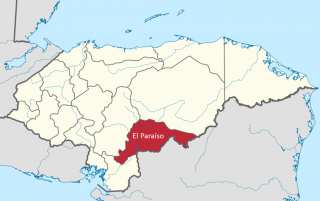
| Department | El Paraiso |
| Corresponding Health Center | CESAR-Manzaragua |
| Distance from compounds | 2 hours |
| Road conditions | Poor |
* Population does not reflect how many patients will be seen on medical
brigades as many people from surrounding communities come seeking
Medical Brigades medical attention.
Top Three Needs Expressed
The top three needs expressed by the key community members are increased staff at the health center (like a permanent physician), an improved water system with a new source for higher quantity of water, and a new latrine project.
Manzaragua’s educational system includes Kinder, Primary, and Middle schools (through 9th grade). Vocation programs offered at the high school level consist of business and arts and sciences. There are 170 students at the schools in the community and the school teacher is Juana Sevilla. It is approximated that about 90% of the community knows how to read and write.
Manzaragua has a water system that was re-constructed in 2001 with the support of SANAA, the governmental water institution. The main problem with the water system is that there is not a sufficient amount of water from the current source to provide for all the community. Water arrives every other day during the summer, and though it is said that the system is chlorinated every 4 days1, some community members are skeptical.About 60% of the community is connected to the system according to the town council president which takes into consideration some surrounding neighborhoods. There is a Water Council with 7 active members, led by president Dario Figueroa.
Manzaragua does have a rural health center in the community that is managed by the non-profit organization Amigos de las Americas in conjunction with the Secretary of Health. There is a health committee made up of 4 members, and dental care is not available at the health center but rather only by brigades that come into the community. Some community members expressed the need for dental care as well as specialists for people living with diabetes.
The most common illnesses seen by community members are the flu, diarrhea, and gastritis. Approximately 40% of the community has latrines that currently function. 0% has eco-stoves (estufas justas). About 90% is estimated to have cement floors and 90% to have pilas (water storage units).
Below are some health center statistics available from the CESAR-Manzaragua2:
I. Caserios (small villages) served by CESAR-Manzaragua, 2009
|
Caserios |
Population |
Number of Homes |
Potable Water (%) |
Latrines (%) |
Malnourished Children |
Births/ % Coverage of Pregnancies |
Order of Priority (based on HC standards) |
|
MANZARAGUA |
206 |
620 |
100 |
99 |
10 |
6 / 75% |
3 |
|
Frijolares |
67 |
178 |
100 |
77 |
25 |
2 / 25% |
2 |
|
Pacayas |
43 |
129 |
98 |
88 |
6 |
3 / 100% |
4 |
|
Liquidanbar |
72 |
200 |
98 |
79 |
13 |
2 / 100% |
2 |
|
Junacatal |
202 |
291 |
32 |
36 |
11 |
3 / 19% |
1 |
Centro de Salud Statistics, Centro de Salud Regional-Danlí, 14 Marzo 2010
*Global Brigades also works in these communities with medical brigades.
The average family income per month is estimated to be 2500 Lempiras, which is approximately L500 (US $26.47) per person3. The majority of homes are made of adobe. The main form of employment is in agriculture on owned land and the main products that are cultivated in the community are corn, beans, as well as a variety of horticultures like tomatoes, peppers, onions, and carrots. Members of Manzaragua have access to credit from BANADESA, a national agricultural loan agency, in addition to a community bank that was started by PRONADEL and has a focus on agricultural loans.
Manzaragua is currently receiving medical brigades from the Baptist Church, most recently in 2008 when they coordinated a multi-disciplinary week-long brigade with general medicine, dentistry, gynecology, and ophthalmology. One key informant commented that while he liked the quantity and efficiency of GB brigades as well as the fact that GB is continually returning to provide continuity of care, she thought the Baptist Church brigades were very well done because they had a variety of specialists and stayed longer in the community.
In 2002, FHIS (Fundación Hondureña para la Inversión Social) supported the construction of the health center and a latrine project. Currently, Amigos de las Americas supports the operations of the health center, bringing in a physician to see patients every 2 months and placing a permanent nurse at the center.
Manzaragua is a medium-sized community that is located high in mountains and is geographically isolated. The health center serves several surrounding villages that are very rural, without much access to highways and transportation.
|
Water |
46th |
|
Health |
57th |
|
Socio-economics |
81th |
|
Collaboration |
35th |
|
Overall |
76th |
Total communities evaluated: 97
Source of information: Key informant interview, Centro de Salud statistics
Date of interview: 14 May 2010
1The accepted regulation frequency for chlorinating water is every 4 days.
2CESAMO and CESAR are terms used for types of health centers. CESAMOs are larger, more comprehensive facilities that usually have a physician on staff at all times and occasionally a dentist. CESARs are more remote, less equipped facilities, usually with 1-2 nurses on staff.
3According to Red Solidaria and World Food Programme in Honduras, the average family is approximated at 5 people per household, the poverty line is L930 (US$49.23) per person per month, and the extreme poverty line is L617 (US$32.66) per person per month.