Hoya Grande, Honduras


 Click on Programs to learn more about their work in this community
General Information
| Population* | 1358 |
| Number of homes | 388 |
| Avg # of people per home | 5-6 |
| Number and % of children under 12 | 350/25.7% |
| Primary Occupations | Agriculture |
| Water System | Yes |
| Rural Bank | Yes |
| % of Houses with Latrines | 70% |
| Electricity | Yes - most houses |
| Corresponding Health Center and Distance | CESAR - Hoya Grande, in community |
| Common Illnesses | Diarrhea, hypertension |
| School Access and Distance | Kinder - 6th grade, in community |
| Municipality | Moroceli |
| Department | El Paraiso |
| Distance from compounds | 1 hour |
* Population does not reflect how many patients will be seen on medical
brigades as many people from surrounding communities come seeking
Medical Brigades medical attention.
Top Three Needs
The top three needs expressed by the key community members are improvements in the water system, a new roof for the health center, and improvements for the main road.
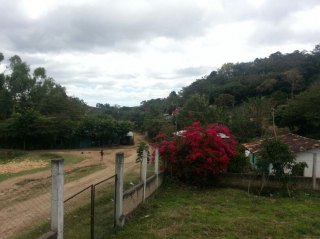
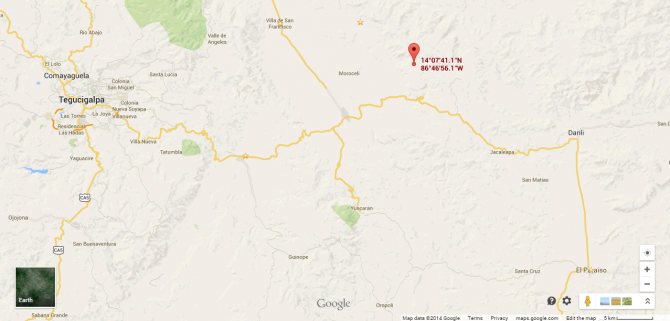
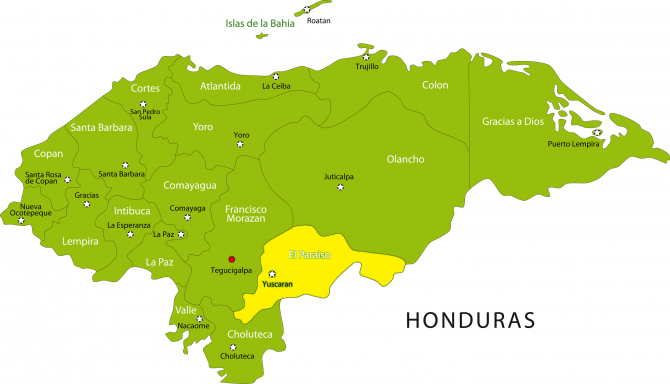
Hoya Grande is located in the mountains near the municipality of Moroceli.
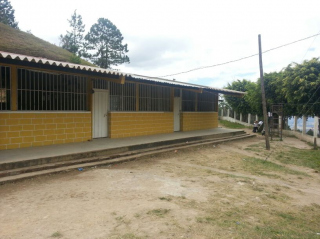
Hoya Grande’s educational system includes Kindergarten through 6th grade. There are a total of 260 students and 7 teachers - one for each grade. To go to school past 6th grade, students must travel to Moroceli. Approximately 90% of the community knows how to read and write.
Hoya Grande has a water system built by the government in 1998 to serve 80 homes. The main problem with the water system is that 8 villages are sharing the same water system, causing water to come only every 8 days due to the strain that is put on the system. There are not many sources of water in the area to be able to supply the need in the community. The water is regularly chlorinated every 4 days.They estimate about 98% of the community is connected to the water system, though its tubing system was made for only 80 homes at the time. The Water Council is made up of 25 members-composed of 5 directors in 5 different sectors. Jonny Torres is the president.
Hoya Grande has a health center in the community staffed by nurse Melsi Rodriguez. There is a community health committee that works in conjunction with the health center. Dental care is not available at the health center. In order to receive dental care or see a doctor, community members must travel to the CESAMO in Moroceli.
The most common illnesses seen by community members are respiratory infections, diarrhea, skin infections, urinary infections, parasites, hypertension, and diabetes. Approximately 95% of the community is estimated to have latrines that currently function. 85% is estimated to have cement floors. Community members are unable to estimate the number of eco-stoves (estufas justas) there are in the community because FORCUENCAS is currently in the middle of an eco-stove project here.
The average family income per month is estimated to be 1750 Lempiras, which is approximately L350 (US $18.53) per person. The majority of homes are made of adobe. About half of households in the community work in agriculture, and the main products that are cultivated are coffee, corn and beans. There are also some community members that raise farm animals and sell eggs and dairy products. Hoya Grande can access credit through a community bank that was formed by PRODERCO in 2000 to boost agricultural assets. There are 60 members in the community bank.
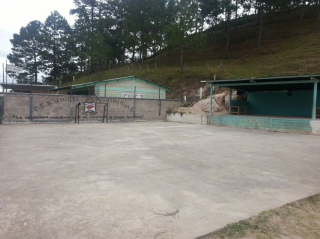
Hoya Grande has had several other organizations carrying out projects in the community. FORCUENCAS is currently working on an eco-stove project, and CORAH has invested in the coffee industry in the community. The Zamorano School, Fundación Vida, and Plan have all supported the school system through building infrastructure and providing school materials, equipment, and technologies.
 |
 |
Hoya Grande has had several other organizations carrying out projects in the community. FORCUENCAS is currently working on an eco-stove project, and CORAH has invested in the coffee industry in the community. The Zamorano School, Fundación Vida, and Plan have all supported the school system through building infrastructure and providing school materials, equipment, and technologies.